
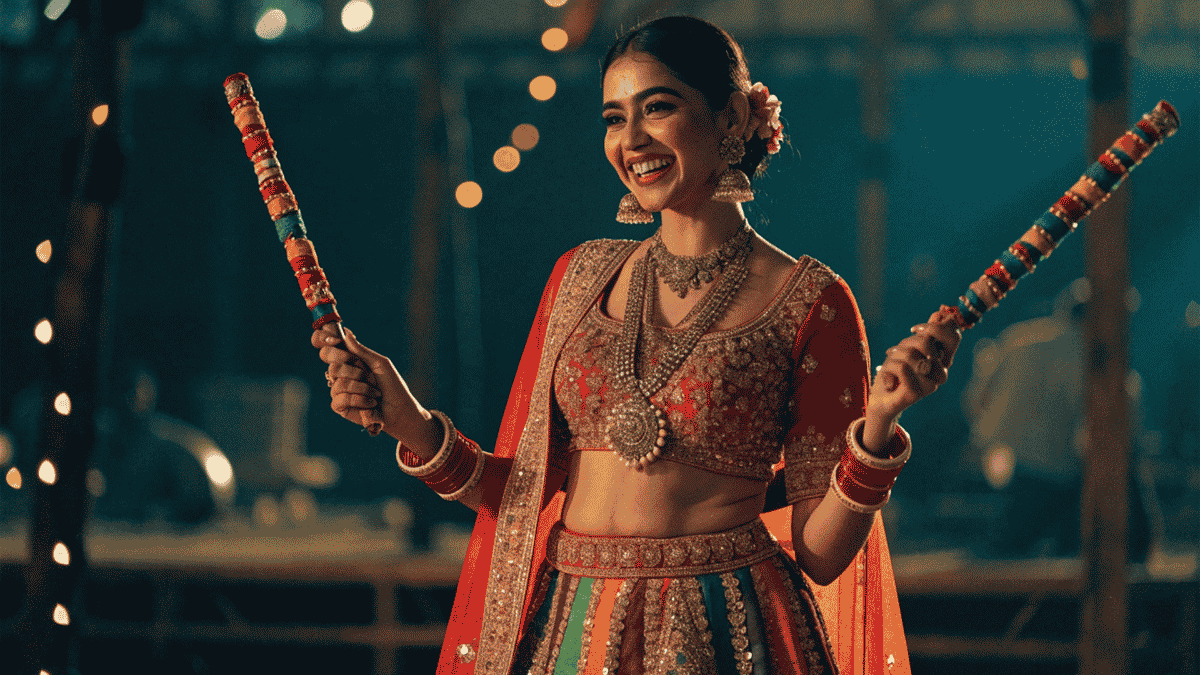


The first rule for surviving a Gujarati garba night is never to underestimate the person dancing next to you. They might look like they are casually clapping and moving in a circle, but give the DJ one particularly enthusiastic Navratri track and suddenly they are executing turns, changing directions, and travelling across the dance floor while you are still figuring out which foot goes where. Garba has a whole vocabulary of movements, and no, it is not all just clapping in a circle until your smartwatch congratulates you on closing your activity rings. So, before you head out for your next Navratri night, here are nine garba movements and styles worth knowing beyond their tutorial names.
Navratri Special: 9 Gujarati Garba Movements That Go Beyond Clapping
1. Taali
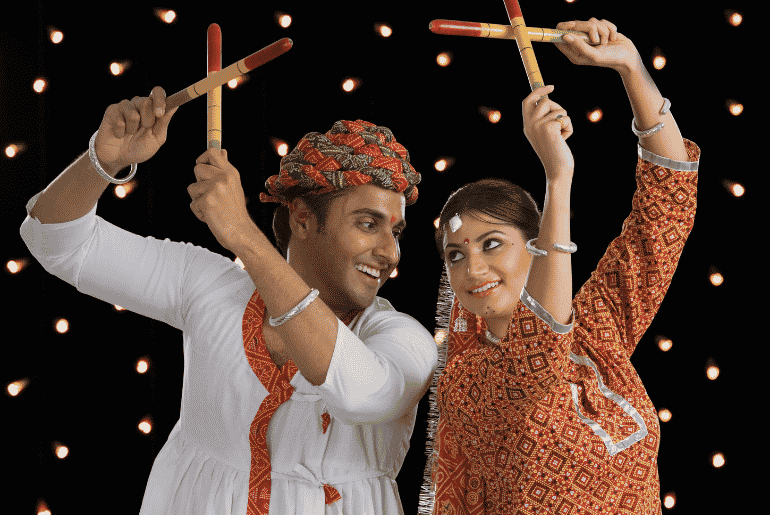
If garba had a signature sound, it would be the sharp, satisfying clap of taali. The word refers to clapping, and the movement is among the first patterns beginners learn. Dancers follow a rhythmic footwork sequence, bring their palms together and continue moving with the circle. In a common version, three claps punctuate the pattern, although the exact choreography can vary. The beauty of taali lies in its simplicity.
You do not need elaborate hand gestures or complicated spins to participate; you need to catch the beat and keep moving. Traditionally, however, the claps are more than a convenient way to stay in time. Garba is closely associated with devotion to the feminine divine, particularly during Navratri, and its circular movement creates a shared rhythm around a central point.
Also Read: What Is Mashal Raas? This 70-Year-Old Garba Tradition In Gujarat Will Give You Chills
2. Be Taali
As the name suggests, be taali involves two claps, with ‘be’ meaning two in Gujarati. Dancers combine the claps with a repeating footwork pattern, creating a rhythm that feels different from the three-clap variation. The trick is to avoid treating the claps as separate actions. They are part of the sequence, so your feet, hands and timing have to work together. Once you get comfortable with the pattern, be taali becomes one of those deceptively easy movements on Navratri that you can repeat without thinking too much about it.
3. Tran Taali
‘Tran’ taali translates to three claps, with tran meaning three. It is a familiar pattern in traditional garba, combining rhythmic clapping with coordinated steps. While the name sounds almost identical to what you might hear when learning taali, the specific footwork and placement of the claps can differ according to the version being taught.
This is where watching an experienced dancer helps more than memorising a sequence on paper. Pay attention to the rhythm, follow the movement and resist the temptation to clap whenever everyone else seems to be clapping. At a lively garba event, that last part is surprisingly difficult.
4. Dodhiyu
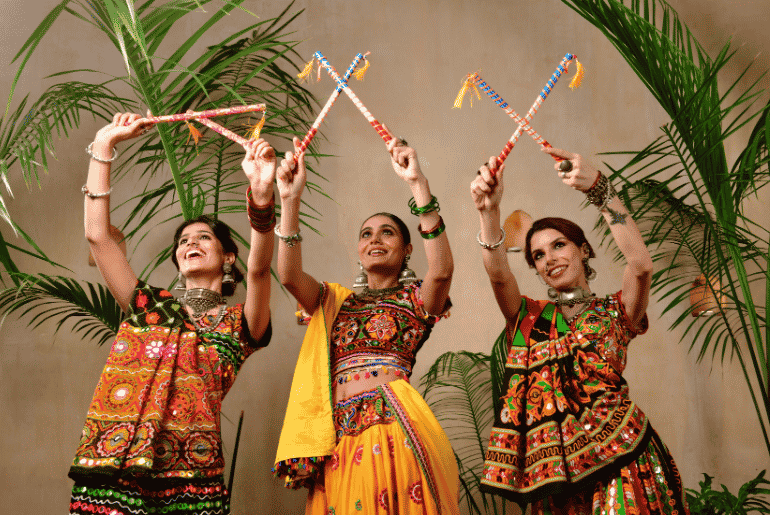
Meet dodhiyu, one of the best-known garba patterns and a favourite for dancers who like their footwork with a little forward momentum. The name is commonly associated with dodh, meaning one-and-a-half, although the precise explanation of traditional dance names can vary.
Dodhiyu generally involves travelling steps, often moving sideways in a repeating pattern around the circle. It is not simply a matter of stepping left and right; the rhythm and coordination give the movement its character. Once the music picks up, the circle begins to travel almost effortlessly, with dancers moving together while keeping their own place in the formation.
5. Hinch
Not every garba movement needs to look like a competitive sport. Hinch is associated with a swinging or swaying quality, bringing a softer, more flowing feel to the dance. Rather than relying entirely on sharp steps and claps, the movement allows the body to follow the rhythm with a gentle rocking motion. Its execution depends on the particular folk-dance tradition and choreography, but the broader idea is to let the movement feel fluid rather than forced. It is a useful reminder that Gujarati folk dancing is not all high-speed footwork on Navratri.
6. Dodhiyu With Turns
If basic dodhiyu feels manageable on Navratri, turns and directional changes can make things considerably more interesting. Choreographed versions may add spins, changes in orientation or additional hand movements to the travelling pattern. There is no single universal sequence for every variation, so the details depend on the teacher, community or performance.
What remains important is the underlying rhythm. A well-executed turn should fit naturally into the movement rather than interrupt the flow of the dance. At large Navratri celebrations, synchronised turns can create striking patterns across the dance floor.
7. Garbi
Here is a distinction worth making: garbi is not simply another footwork combination like taali or dodhiyu. The term is associated with Gujarati folk dance and devotional traditions, while garbo refers to the decorated earthen pot or lamp traditionally linked to garba’s symbolism.
In some traditional settings, dancers perform around a central object while singing devotional songs. The imagery of light within an earthen vessel is commonly connected with life and the divine feminine. Garbi traditions and performances vary across Gujarat, so the terms should not be treated as interchangeable names for a single step on Navratri.
Also Read: Navratri 2026: 8 Temples In Mumbai To Seek Goddess Durga’s Blessings This Festive Season
8. Three-Step Garba
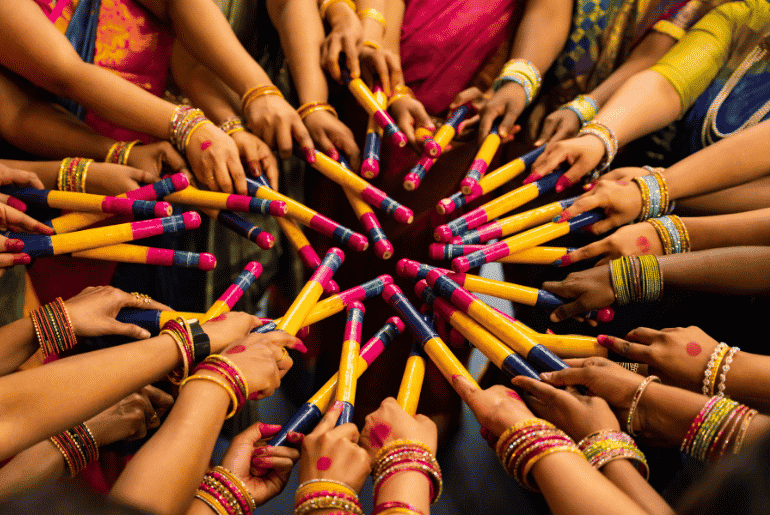
Sometimes the smartest move is to return to the basics. A three-step garba pattern uses a repeating sequence of three steps, often accompanied by clapping or coordinated arm movements. It is a useful starting point for newcomers because it teaches them to recognise the beat and move continuously without becoming overwhelmed by complicated choreography. The sequence can also serve as a foundation for more elaborate variations on Navratri. Experienced dancers may make it look effortless, but maintaining the rhythm while travelling with a large group requires practice.
9. Ramzat
Ramzat is associated with the spirited, energetic side of Gujarati folk dancing on Navratri. Rather than describing one universally fixed footwork pattern, the term can refer to lively folk-dance celebrations and styles, with its precise usage varying by context. In contemporary Navratri settings, it is often used to evoke vigorous, high-energy dancing.
Think of the kind of moment when the beat gets faster, the circle becomes more animated and even the people who promised to sit out the next song find themselves back on the floor. Ramzat captures that collective energy, although it should not be confused with a single prescribed combination of steps.
The next time someone claims that garba is just clapping and circling a ground on Navratri, ask them to distinguish their be taali from their tran taali while keeping up with dodhiyu.
Cover Image Courtesy: akkijohn/Canva Pro
FAQs
What are the different types of Garba steps?
Popular Garba movements and styles include Taali, Be Taali, Tran Taali, Dodhiyu, Hinch and variations featuring turns. Garbi and Ramzat are related to broader devotional and folk-dance traditions rather than always describing one fixed step.
What is the difference between Be Taali and Tran Taali?
Be Taali means two claps, while Tran Taali means three claps. Both combine rhythmic clapping with coordinated footwork, although choreography can vary across traditions.
What is Dodhiyu in Garba?
Dodhiyu is a popular Garba pattern involving coordinated travelling steps, often moving sideways around the dance circle. Some versions incorporate turns and directional changes.


