
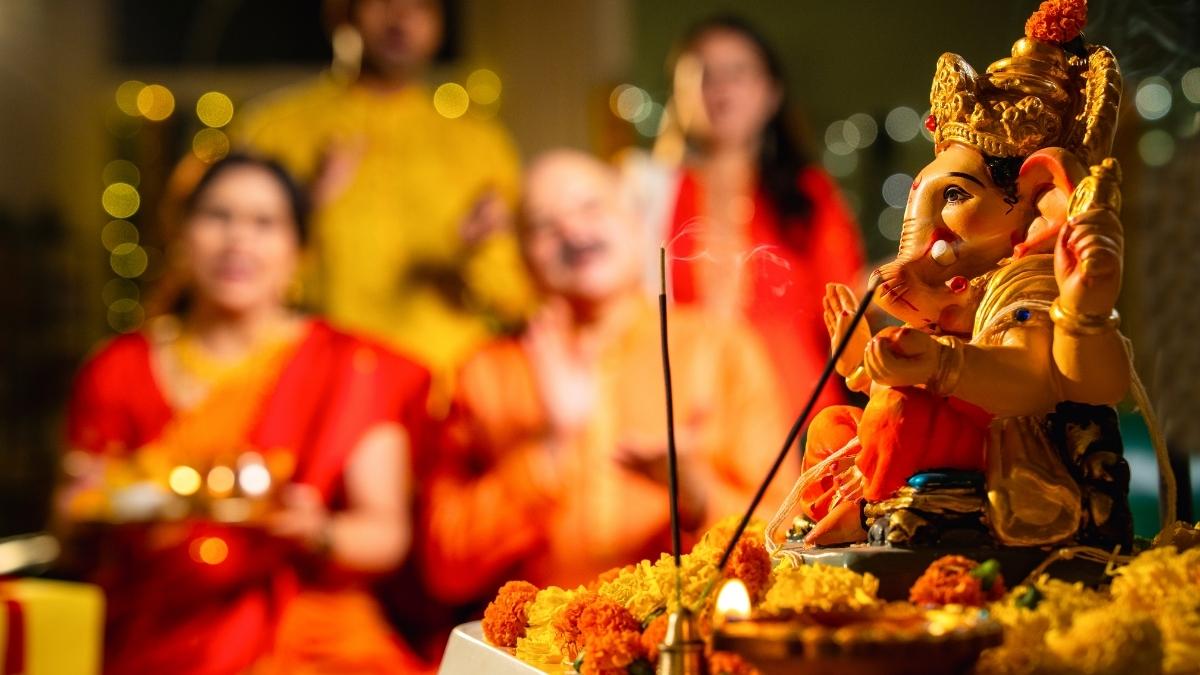



For many households, Ganesh worship peaks in September and fades by Visarjan. But in older homes, especially in parts of Maharashtra, there’s another date that quietly carries more cultural weight. Maghi Ganpati doesn’t arrive with crowds spilling into steets or towering idols. It arrives with routine and restraint and is believed to mark the actual earthly manifestation of Lord Ganesha, observed on Magha Shukla Chaturthi, usually falling between late January and early February. This day isn’t about celebration as much as alignment with time, intention, and thought.
What Maghi Ganpati Represents
According to the Hindu lunar calendar, the Chaturthi tithi starts early on 22 January and continues into the early hours of 23 January this year. Maghi Ganpati is tied to the Hindu month of Magha, a period traditionally associated with mental discipline, cleansing, and reset. The idea is simple but demanding: before you ask for success, you must sharpen judgment. That’s why Maghi Ganpati is often called Ganesh Jayanti in classical texts as it acknowledges Lord Ganesha not as a festival figure, but as the origin point of wisdom itself.
Long before Ganesh Chaturthi became public, Maghi worship was private and priest-led. This was the Ganesh worship of scholars, accountants, farmers, and planners, people whose work depended on foresight.
Also Read: Mumbai Gears Up For Maghi Ganesh Chaturthi With Carter Road Cha Raja; Siddhivinayak Shut For…
The Birth Date Of Lord Ganpati
Scriptural references like the Mudgala Purana and oral Shaiva-Ganapatya traditions mention Ganesh’s birth during Magha as a response to imbalance, cosmic and human. The timing is significant as Magha comes after the year’s harvests, when survival is secured and reflection becomes possible.
That’s also why Maghi Ganpati rituals emphasise long-term obstacles like legal disputes, academic uncertainty, delayed marriages and unstable livelihoods. This is not the Ganesh you approach for instant miracles, this is the one you approach when things have been stuck for years.
Also Read: Why Are 15 Indian Vultures Released In Maharashtra’s Melghat Tiger Reserve?
How Maghi Ganpati Is Actually Observed
The day begins early and there is a quite kind of festive spirit in the air. Homes avoid decoration overload and idols are small, often made of metal or clay. The abhishek uses water, milk, durva and red flowers.
Food follows the same philosophy. Modaks exist, but they’re simpler. Til-gud, poha, kheer are very much part of the celebration, as all these foods that belong to the season. Many families observe partial fasting as an effort to show love through restraint.
A key ritual detail that is often missed is that people sit down after the puja and plan their finances, education, and decisions. Yes, this is the day notebooks come out.
Things you can do for a simple yet meaningful celebration:
- Keep the idol for one day only
- Avoid loud music or group gatherings
- Read or listen to the Ganapati Atharvashirsha attentively
- Donate quietly, especially things like books, stationery, food grains
Also Read: Bappa In Sweater? Pune’s Sarasbaug Cha Raja Gets Warm For Winter
How Maghi Ganpati Is Different From Ganesh Chaturthi
Ganesh Chaturthi celebrates arrival while Maghi Ganpati celebrates purpose. One is communal and emotional, the other is personal and cerebral. Maghi Ganpati is a contemplative observance that marks the spiritual birth and purpose of Lord Ganesha, focused on discipline, and inner clarity, whereas Ganesh Chaturthi celebrates his arrival with public devotion.
Chaturthi asks Lord Ganesha to walk with you and Maghi asks whether you’re walking in the right direction at all.
Also Read: 12 Harvest Festivals Of India That Mark The Season Of Abundance & Celebrate Its Crops
Maghi Ganpati doesn’t compete with Ganesh Chaturthi, and it doesn’t need to. It is celebrated quietly because it serves a different function. It asks for discipline before desire and foresight before faith. In a culture that loves ceremonious occasions, Maghi Ganpati remains deliberately understated, reminding devotees that wisdom doesn’t always need spectacle around it, it waits to be chosen.
Cover Image Courtesy: artistfromartist/canvapro
For more such snackable content, interesting discoveries and the latest updates on food, travel and experiences in your city, download the Curly Tales App. Download HERE. First Published: January 22, 2026 1:19 PM