
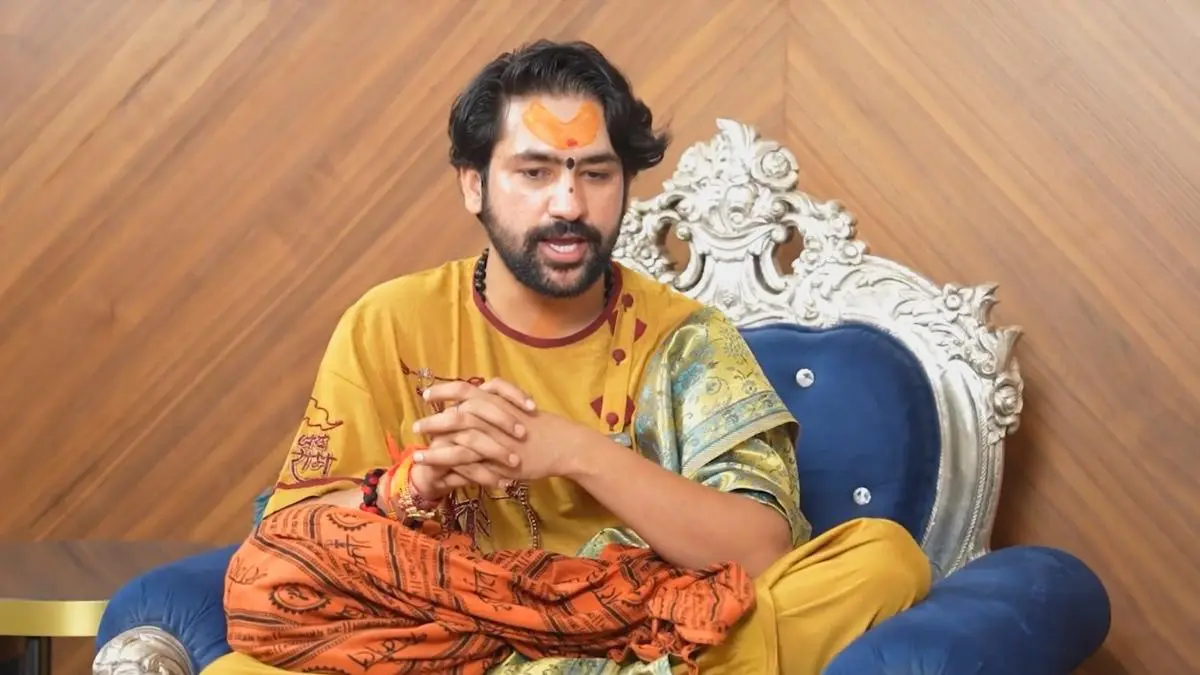


Known for drawing huge crowds through his spiritual discourses, Dhirendra Krishna Shastri, better known as Bageshwar Baba, has become one of the most discussed spiritual figures in the country today. While many know him for his teachings on faith and devotion, Sunday Brunch with Kamiya Jani peels back another layer of his personality. The conversation isn’t just about religion; it is about purpose, responsibility and the way he chooses to look at life.
Bageshwar Baba On Being A Spiritual Guru
One of the most interesting moments comes when Kamiya Jani, our Editor-in-Chief, asks him a seemingly simple question: what are the pros and cons of being a Baba? Most people would probably expect him to speak about influence, respect or the challenges that come with public life. Instead, he dismisses the idea altogether.
“There are no pros. There are no cons.”
He explains that he never woke up one day and decided to become a guru. According to him, that identity was gifted to him by people. They placed their faith in him, started seeing him as a spiritual guide, and he accepted that emotion with respect.
He then uses a simple analogy to explain what he believes his role actually is. “I only show the path,” he says. Whether someone chooses to walk on it is very much up to them. A guide cannot carry another person to the destination; at best, he can point in the right direction. If someone walks with sincerity, they will eventually reach where they are meant to.
Also Read: Shri Aniruddhacharya Opens About His Journey From Jabalpur To Becoming A Renowned Spiritual Leader
On Wealth, Charity & Spirituality
That same thinking shapes the way he looks at money, fame and recognition. He says there cannot be any personal gain because he never treated this journey like an investment. If you haven’t invested with expectations, what exactly is there to lose? In his view, there is no concept of ghaata because there was never any calculation of profit to begin with.
He also shares where the money that comes his way is used. Rather than seeing it as personal wealth, he says it goes back into social work, supporting the marriages of underprivileged girls through kanya vivah initiatives, contributing towards cancer hospitals and funding other charitable causes.
It is an unusual way of looking at influence. In a world where success is often measured by what a person accumulates, Bageshwar Baba speaks about letting go of ownership altogether.
Also Read: Gippy Grewal’s Hotel Management Secrets Were Exposed On Sunday Brunch Play
Watch the full Sunday Brunch episode on the Curly Tales App for more bouts of wisdom!
Cover Image Courtesy: Internal
For more such snackable content, interesting discoveries and the latest updates on food, travel and experiences in your city, download the Curly Tales App. Download HERE.FAQs
What did Bageshwar Baba say about being a Baba?
Bageshwar Baba said there are neither advantages nor disadvantages to being a Baba because he never chose the role himself. According to him, people gave him that identity through their faith.
Did Bageshwar Baba always want to become a spiritual guru?
No. During Sunday Brunch, he explained that he never decided to become a guru. Instead, he believes people accepted him as one, and he simply respected their faith.
What did Bageshwar Baba say about money and fame?
He said he never viewed his spiritual journey as an investment, so he doesn't think in terms of profit or loss. According to him, there is nothing personal to gain or lose.
How does Bageshwar Baba say donations are used?
He shared that the money received is used for charitable work, including supporting kanya vivah initiatives, contributing towards cancer hospitals and other social welfare activities.


