
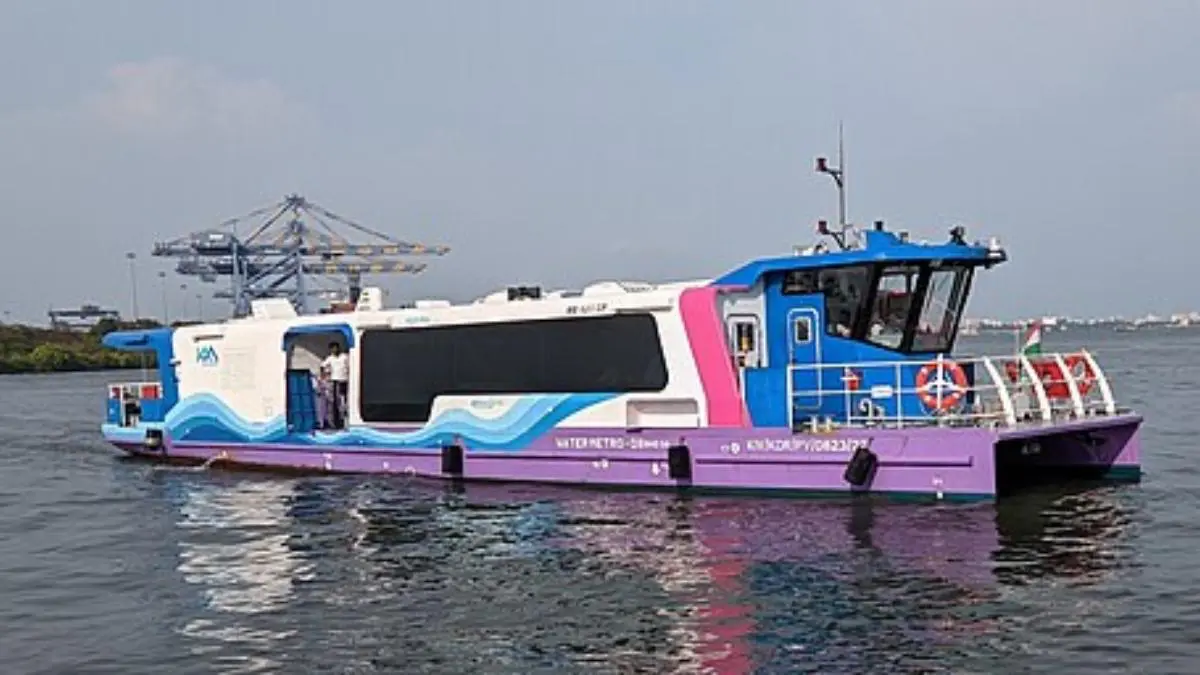


In India, travel options are expanding, giving travellers more choices than ever. After the success of the Kochi Water Metro, the government is now planning to introduce similar water transport services in more cities across the country. Isn’t that exciting? Read on to know the deets!
Government Plans To Launch Water Metro Services In Indian Cities
The Union Government is planning to launch Water Metro services in 18 more cities across India after the success of Kochi. As per News18, Union Minister for Ports, Shipping and Waterways Sarbananda Sonowal recently held a meeting to review the overall progress of the project. During the meeting, he revealed that the government is already planning to introduce water transport services in different cities.
In the first phase, Water Metro services will be launched in cities like Guwahati, Srinagar, Patna, Varanasi, Ayodhya and Prayagraj. In the second phase, Tezpur and Dibrugarh have been selected.
Also Read: Women Can Now Travel Free In KSRTC Buses In Kerala From THIS Date; All You Need To Know
How Water Metros Are Cheaper Than Regular Metro Systems?
According to Sarbananda Sonowal, Water Metro projects cost less than regular metro systems. How? Existing rivers and waterways are used, so less construction and land are needed. News18 reported that he also shared that electric and hybrid ferries can lower running costs and support eco-friendly travel.
The Kochi Water Metro has now become one of the most important transport systems in Kerala. The new projects will not only help daily commuters but may also boost tourism in cities with rivers and waterways. For this project, the government will prioritise cities with strong transport demand, navigable waterways, and populations above one million.
The government is planning to develop a proper transport system for these Water Metro projects. This will include modern ferries, passenger terminals, charging stations, waiting areas, and navigation facilities for smooth travel. Officials are also focusing on building the ferries in India and connecting Water Metro services with other public transport systems.
The government is discussing different ways to fund these Water Metro projects. This may include partnerships between the Centre and states, public-private partnerships (PPP), or projects fully funded by the government.
In February 2025, the Inland Waterways Authority of India asked Kochi Metro Rail Limited to study the possibility of launching Water Metro services in 18 cities. The site visits have already been completed, and feasibility reports for cities like Srinagar, Patna, Guwahati, Varanasi and Ayodhya have received approval.
How excited are you to travel in Water Metros? Tell us in the comments below!
Also Read: What Is Pazham Pori, A Kerala Tea Snack, Devoured By Rashmika Mandanna On Her Kochi Vacay?
Cover Image Courtesy: Wikipedia
FAQs
Which city in India has Water Metro services?
Kochi in Kerala has Water Metro services which has now become one of the most important mode of transport.
In which cities, Indian government is planning to launch Water Metro services?
The Indian government is planning to launch Water Metro services in cities like Guwahati, Srinagar, Patna, Varanasi, Ayodhya, Prayagraj, Tezpur and Dibrugarh.
Why Indian government is planning Water Metro services?
Water Metro services reduce running costs and support eco-friendly travel. This mode of transport also helps reduce traffic on roads and other public transport systems.


