





There’s something quietly revealing about the way games were imagined in India. They weren’t built only to entertain a restless afternoon. They sat somewhere between storytelling, strategy, moral instruction, and social rehearsal. A game board could be a battlefield, a spiritual map, or a lesson in power dynamics. Some of these games were played casually on cloth or scratched into stone floors; others unfolded in royal courts with an audience watching every move. Over time, many travelled far beyond the subcontinent, changing names and shedding layers, but their original logic remained unmistakable. What follows is a closer, grounded look at ten board games from India, not as fun pastimes, but as living ideas that still shape how the world plays.
10 Board Games From India That Are Older Than You Think!
1. Chaturanga
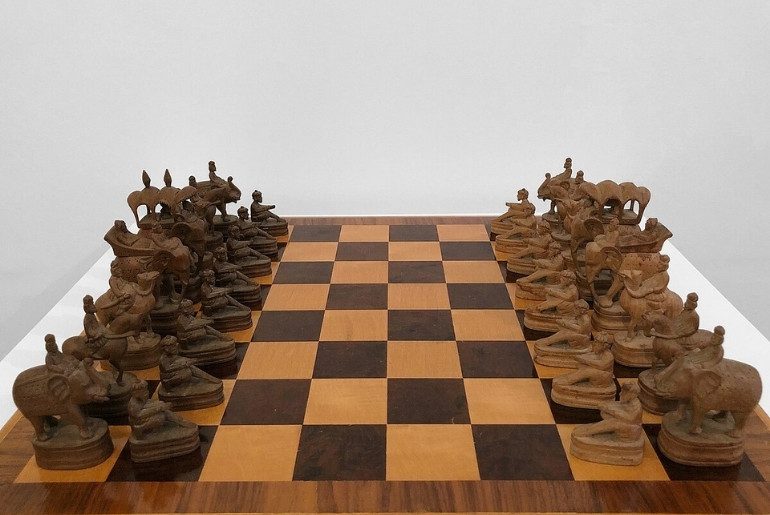
Chaturanga took shape around the 6th century CE, during the Gupta period, when military organisation and intellectual life were deeply intertwined. The board wasn’t abstract. It mirrored the real structure of an Indian army: infantry, cavalry, elephants, and chariots. Each move echoed battlefield logic, i.e. protect the king, anticipate attacks, and sacrifice when needed. What stands out is how little of this logic has aged.
2. Pachisi
Pachisi lived in homes as much as it did in palaces. Played on a cross-shaped cloth board, often using cowrie shells as dice, it allowed luck to open doors, but never guaranteed safety. One careless move could undo a perfect throw. Accounts of Mughal emperor Akbar playing Pachisi with human “pieces” in palace courtyards aren’t just for the plot; they underline how culturally central the game was. Long before it became Ludo or Parcheesi elsewhere, Pachisi was already woven into Indian daily life.
3. Ashtapada
Ashtapada’s 8×8 grid feels familiar today, but its philosophy was different. There were no alternating colours and certainly no visual aesthetics. Certain squares were marked, altering movement and strategy, while dice introduced uncertainty. Mentioned in early Sanskrit and Jain texts, Ashtapada belonged to a time when games weren’t separate from spiritual or intellectual life. Winning mattered, but understanding the system mattered more.
4. Gyan Chaupar
Gyan Chaupar was blunt about its intentions. This was a game that judged you. Ladders rewarded virtues like honesty and humility. Snakes punished arrogance, greed, and anger. Progress wasn’t neutral, but it was ethical. When the game travelled abroad and became Snakes and Ladders, the moral language vanished. What remained was the mechanism, stripped of meaning. In its original form, every rise and fall carried a message.
5. Chaupar
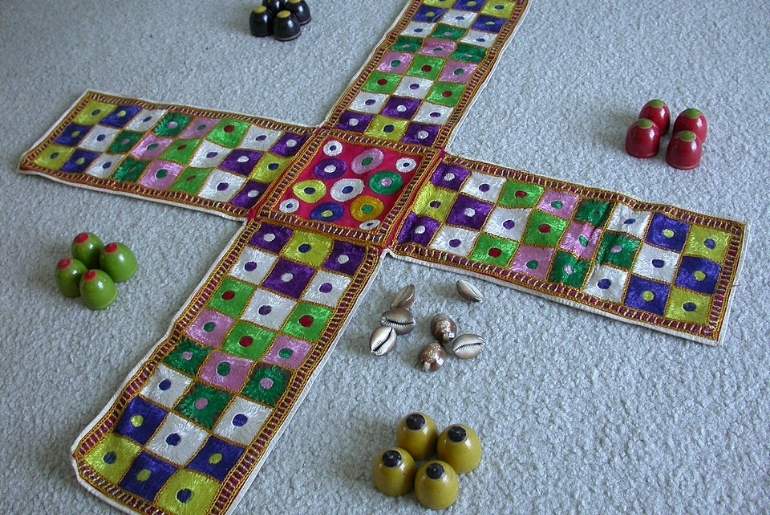
Chaupar resembles Pachisi at first glance, but it plays differently. Dice are present, yet strategy dominates. Timing, positioning, and reading your opponent matter more than luck. References to Chaupar appear in ancient texts and epics, often linked to royalty. It mirrors decision-making under pressure, when advancing too early can be disastrous, and waiting too long can cost you everything.
6. Moksha Patam
The board itself represents the soul’s journey through desire, discipline, downfall, and release. Snakes pull you back into illusion; ladders lift you through knowledge and virtue. The idea of “winning” almost feels secondary here. The game accepts failure as part of movement. Falling isn’t unfair, it’s expected and even awaited. That worldview feels distinctly Indian, rooted in cycles rather than straight lines.
7. Shatranj (Indian-Persian Transition)
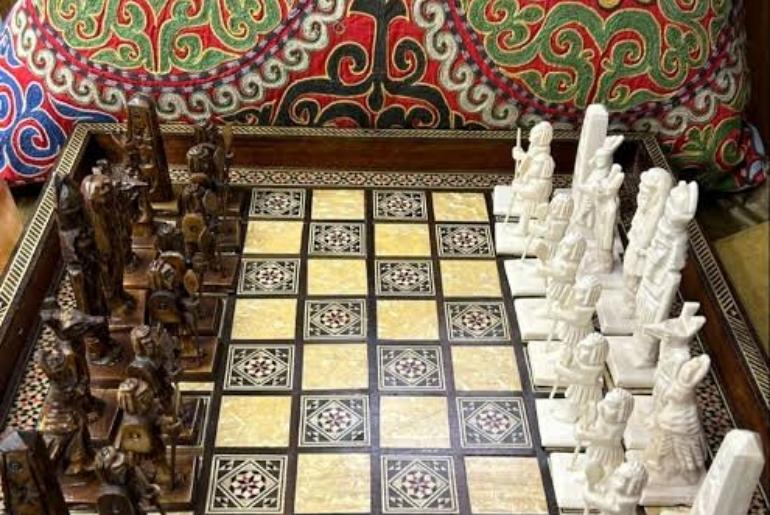
Shatranj is often described as Persian, but its foundation is unmistakably Indian, evolving directly from Chaturanga. The pace was slower, the movements restrained, and the emphasis firmly on calculation. For centuries, Shatranj was played across India, Central Asia, and the Islamic world. It became a marker of intellect and discipline, showing how Indian strategic thought adapted without dissolving.
8. Navakankari
Navakankari doesn’t appear in popular memory today, but it reveals something important: ancient Indians were comfortable turning numbers into play. Movement depended on dice, but paths were restrictive, forcing players to plan ahead. This wasn’t random entertainment. It quietly trained players in probability, anticipation, and consequence. skills that mattered far beyond the board.
9. Satoru (Indian Traditional Form)
Satoru belongs to a family of Indian grid-based strategy games that value silence and precision. Two players compete by blocking space, limiting options, and forcing errors. Aggression rarely works here. These games reward patience and punish impatience. There’s no flashy victory in this one, just the slow satisfaction of control.
Also Read: Gokarting, Masterchef Stories & A Spicy Game with Chef Kunal Kapur In Abu Dhabi
10. Tiger and Goats (Bagh-Chal)

Few games explain power better than Tiger and Goats. One side controls a handful of powerful tigers. The other controls many fragile goats. The tigers can capture; the goats cannot. Yet the goats often win. The lesson is unavoidable: strength without coordination fails, and numbers without planning collapse. It’s simple, sharp, and endlessly replayable.
Indian board games were never throwaway diversions. They carried ideas about ethics, power, spirituality, patience, and consequence. Many crossed borders and survived centuries, even when their stories were forgotten. Looking back at these games isn’t about nostalgia. It’s about recognising that play, in the Indian tradition, was a serious craft, one that trained the mind while quietly reflecting how life itself unfolds.
Cover Image Courtesy: indahlestar29/Canvapro and guillermospelucin/Canvapro
For more such snackable content, interesting discoveries and the latest updates on food, travel and experiences in your city, download the Curly Tales App. Download HERE. First Published: January 20, 2026 6:16 PM