
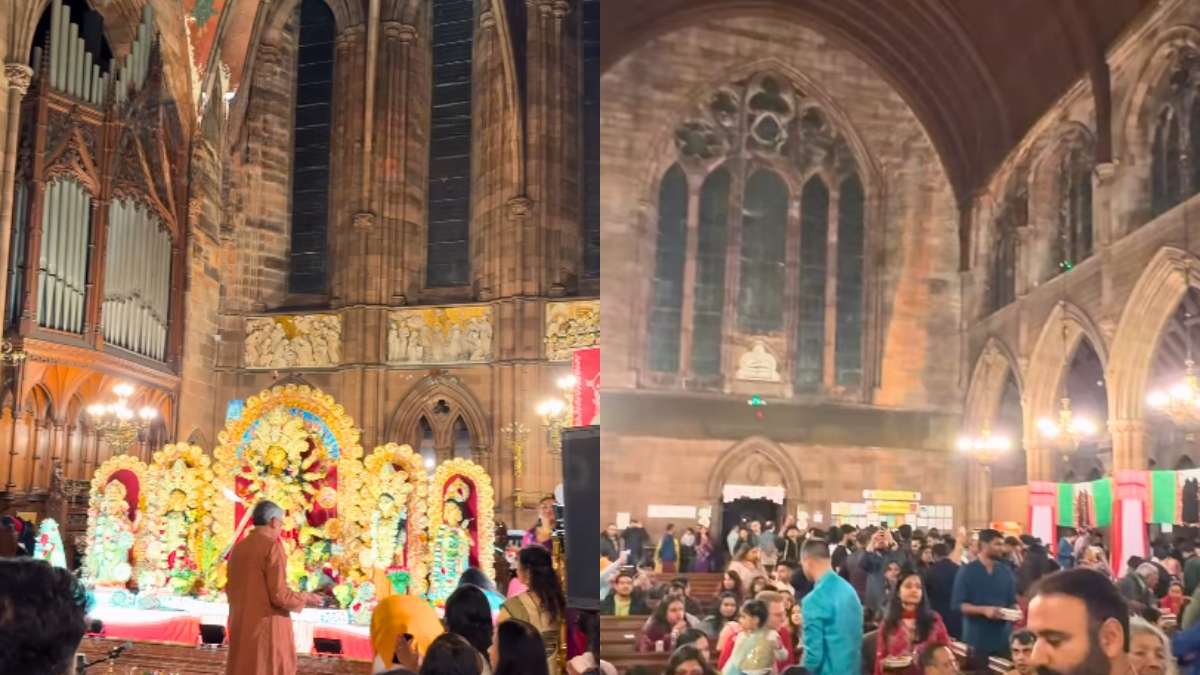

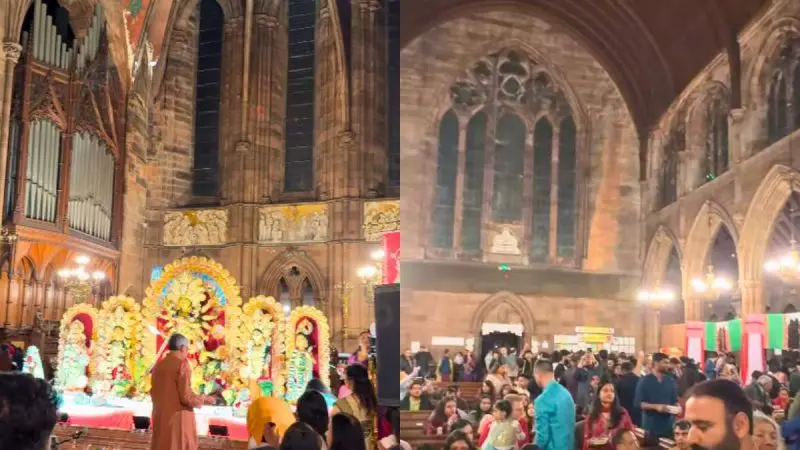
Imagine celebrating Durga Puja inside a church in Scotland, thousands of miles away from Kolkata. For the Bengali community in Glasgow, this isn’t a one-off event but a tradition that has continued for decades. Every year, as Durga Puja approaches, the community comes together to worship Maa Durga, enjoy traditional Bengali food and celebrate a festival that holds a special place in their hearts. And what makes it even more interesting is that this annual celebration dates back to 1981!
How Durga Puja Celebrations Began In Glasgow
The story goes back to a small group of Bengali residents who wanted to bring a piece of home to Scotland. Bangiya Sanskritik Parishad (BSP Glasgow), a Bengali cultural association formed in 1971, took the initiative to organise Durga Puja in Glasgow in 1981.
According to the organisation’s official website, the first celebration took place at the Glasgow Art Centre. Since bringing a traditional Durga idol from India wasn’t possible at the time, the organisers used a framed picture of the goddess instead. The following year, they managed to acquire a traditional idol, bringing the celebrations closer to the way Durga Puja is observed back home.
What began as an effort by a small group of Bengalis gradually grew into a major annual gathering, attracting members of the Bengali community from across Scotland and even the north of England.
Also Read: Throwback: When J.K. Rowling Took A Kolkata Durga Puja Pandal To Court
Durga Puja Celebrations Inside A Church In Glasgow
What makes Glasgow‘s Durga Puja particularly interesting is its setting. The celebrations take place inside a former church building at Coats Paisley, on High Street in Paisley, near Glasgow. With its soaring arched ceilings, tall glazed windows and chandeliers, the historic venue offers a striking backdrop for a festival rooted in Bengali Hindu traditions.
During Durga Puja, the atmosphere transforms as the sound of dhak drums blends with Sanskrit chants and prayers to Maa Durga. The idol, festive decorations and traditional rituals bring a distinctly Bengali touch to the space, creating an unusual yet memorable meeting of architectural heritage and cultural traditions. The venue has previously been described as a former church converted into an event space.
What started as a small community gathering has grown into an annual event that brings together Bengalis from across Scotland and beyond. Today, the festival is also an opportunity for Indian students, Scottish residents and people from other backgrounds to experience Bengali culture through its rituals, food and festivities.
From offering prayers to Maa Durga to enjoying traditional Bengali delicacies such as phuchka, alu kabli and bhog, the celebration recreates the familiar sights, sounds and flavours of home.
Perhaps that’s what makes this Durga Puja celebration so special:l thousands of miles away from India, a historic church becomes a place where the Bengali community can come together and celebrate its traditions year after year.
Cover Image Courtesy: Instagram/sabbietravels


